

The Quiet Intelligence of Old Homes
Standing in an old home, you begin to notice things that are easy to miss in modern construction. The proportions feel deliberate. Materials meet with quiet precision. Even the smallest fixtures — a marble corner sink, exposed plumbing, a worn checkerboard floor — reveal a time when craftsmanship guided the work.
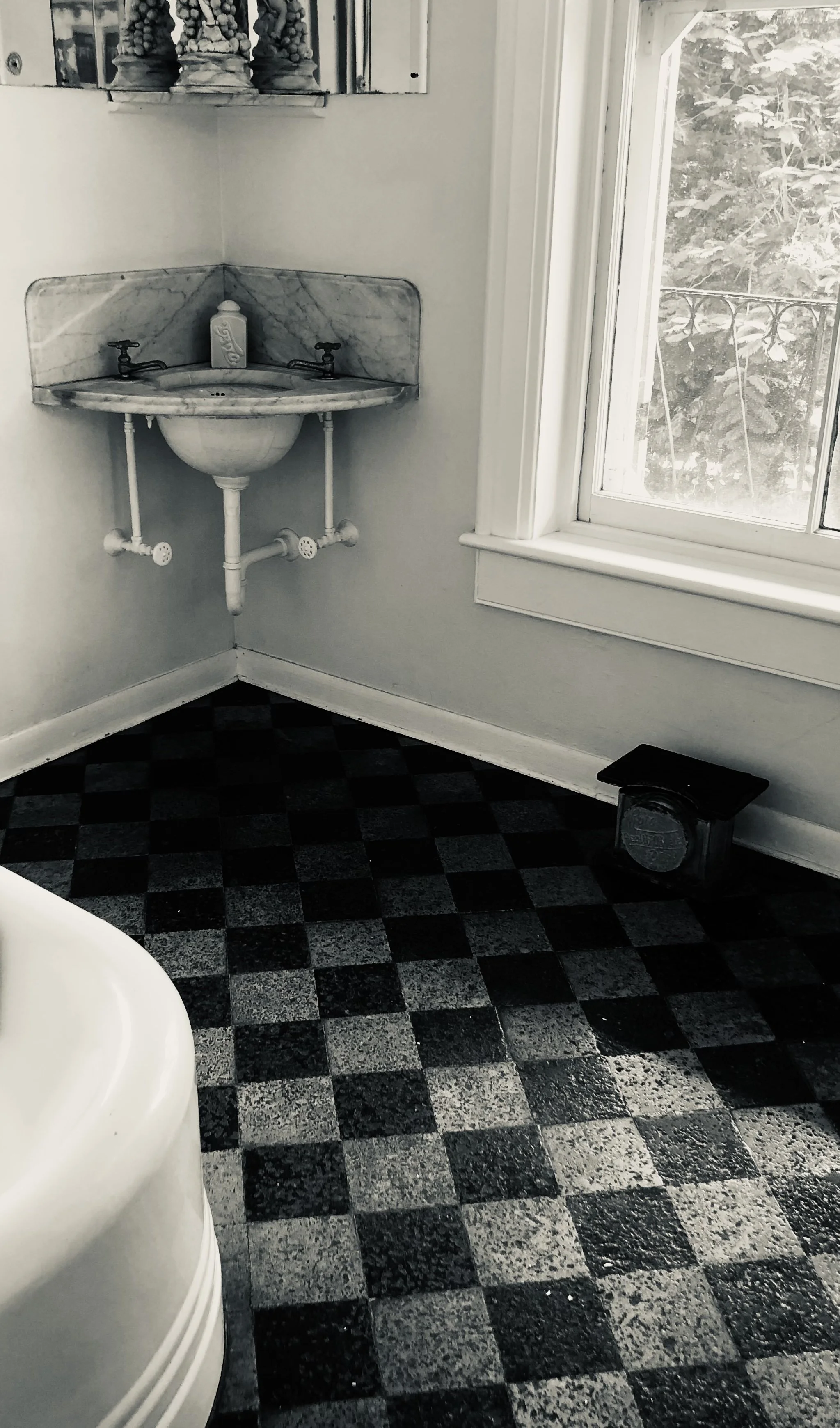
Marble corner sink in a historic home — a small detail from a time when craftsmanship guided even the simplest fixtures.
These buildings were not perfect, but they were thoughtful. The people who built them worked with patience and care, shaping spaces meant to endure.
In many ways, historic homes remind us that construction was once treated as a craft first, and a process second
Builders once approached their work with a quiet sense of responsibility to the materials and to the people who would live with the results. Decisions were slower. Details mattered. Construction was not simply about finishing a job — it was about shaping something that would last.
And yet, somewhere along the way, much of the construction industry shifted away from that mindset. Speed replaced patience. Efficiency replaced care. Projects became defined by deadlines and cost pressures rather than the quiet discipline of craft.
The result is something many clients and builders alike have come to accept as normal: rushed decisions, reactive problem solving, and a sense that construction is inherently chaotic.
But historic homes tell a different story.
They remind us that building well has never been about perfection. Many of these homes have quirks and imperfections that reveal the hand of the person who built them. What they share, however, is an underlying sense of intention — a feeling that the builder took the time to understand the materials, the structure, and the life the space was meant to support.
When you stand in an old room, you can often feel that quiet intelligence at work. The proportions feel balanced. The materials have aged with dignity. Even small details — a marble sink in the corner of a room, plumbing left visible and honest, a floor laid with patient care — speak to an approach that valued durability over speed and thoughtfulness over convenience.
Historic homes are not valuable simply because they are old. They matter because they remind us that construction once operated with a different set of priorities — where craft came before chaos.
Perhaps this is also why I have been drawn to historic homes throughout my career.
They make you slow down.
Plaster and lath walls. Knob-and-tube electrical. Layers of flooring and wallpaper that reveal decades of decisions made by previous owners. Structural techniques that require patience to understand before anything can be changed.
When you work on a historic home, you don’t get to rush. The building itself demands that you pay attention.
And in that slowing down, something interesting happens.
You begin to notice that the builders who came before us were not working in chaos. Their work reflects a steady, methodical understanding of materials and structure. Even when the tools were simpler, the thinking behind the work was careful and deliberate.
It becomes clear that building well has never been about speed.
It has always been about intention.
Historic homes remind us that construction was once treated as a craft first and a process second. The work demanded patience, curiosity, and respect for the structure itself.
Those values are not outdated.
If anything, they may be exactly what the construction industry needs to remember.
Perhaps the future of construction is not about building faster or bigger.
Perhaps it begins by rediscovering something older — the quiet discipline of craft, and the belief that the spaces we build deserve our full attention.